Dallas, Texas · Established 2009 · Zero landfill
A tote should
outlive its label.
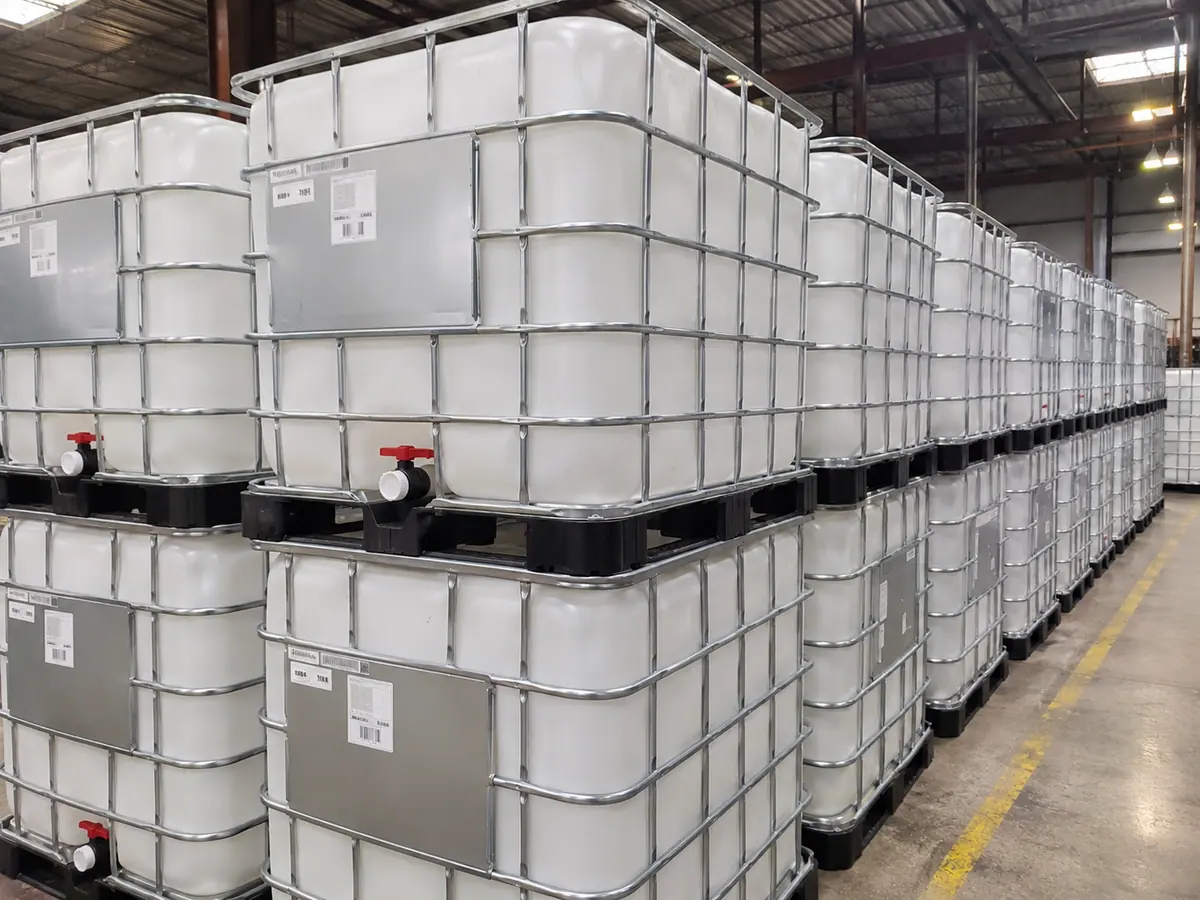
RetoteHub keeps intermediate bulk containers in circulation instead of in the ground. We collect used IBC totes, wash them hot, pressure-test them, put honest paperwork on them and send them back out to work. The ones too far gone become regrind and baled steel. Nothing we touch reaches a landfill.
91% of arrivals leave as containers, not as waste
Start here
Quote, pickup, or recycling — one form.
Tell us what you have or what you need. Every field below feeds the same inbox in Dallas, and a human answers within one business day.
Free, no-obligation quote. Orders and tote pickups are fulfilled through our regional IBC supplier network.
- 275 GALLON RECONDITIONED FROM $139
- FREE DFW PICKUP ON 12+ TOTES
- 4 PSI PRESSURE TEST ON EVERY UNIT
- PRIOR CONTENTS IN WRITING, ALWAYS
- ZERO LANDFILL SINCE 2016
- FOOD-GRADE STOCK ON THE GROUND
Why used wins
Recycling is the consolation prize. Reuse is the point.
Grinding a tote back into pellets recovers the material and spends the energy all over again. Washing the same tote and filling it a seventh time keeps the embodied energy of the original manufacture in service. That is the whole thesis of this company, and it is not complicated.
Five stations and no exit ramp.
A tote enters our loop at collection and leaves it only when the HDPE has genuinely given up. Then the bottle is granulated and the cage is baled, and both go back into industry as feedstock. There is no step in this diagram labelled “disposal”, because we never built one.
- Collect. Free pickup across DFW on 12 totes or more; quoted freight nationwide, netted against what we pay you.
- Wash. 180 °F caustic, three rinses, closed clarifier loop. About 23 gallons of fresh water per tote, not 140.
- Test. 4 PSI held for ten full minutes. A tote that drops a pound goes back or goes to regrind. No exceptions, no “probably fine”.
- Resell. Graded, labelled, photographed, with prior contents in writing on the invoice.
- Return. Every invoice carries a buy-back clause. We would rather have the tote back than sell you another one.
What is on the ground
Eight ways to buy a container that already exists.
Everything here is in stock or in the wash line right now. Grades are honest, prior contents are documented, and we will tell you when the cheaper option is the right one.
Reconditioned IBC Totes
Collected, triple-rinsed, pressure-tested, re-labelled. Same tote, second life, half the price of new.
Open 02Food-safe optionRebottled IBC Totes
A brand-new HDPE bottle dropped into a reclaimed steel cage and pallet. Virgin-grade interior, 0 lb of new steel.
Open 03When virgin is requiredNew IBC Totes
Sometimes a spec sheet says new and nothing else will do. We stock them — and we will still take the empties back.
Open 04Edible cargoFood-Grade Totes
Single-trip totes that carried nothing but food: syrup, juice concentrate, oils, vinegar, liquid sugar.
Open 05WorkhorseCaged Poly Totes
The standard 275 and 330 gallon caged poly tote in every grade we carry, from as-is to food.
Open 06Infinite cyclesStainless Steel IBCs
304 and 316L stainless intermediate bulk containers. The only tote that genuinely never wears out.
Open 07Keep it runningAccessories & Parts
Valves, lids, gaskets, dust caps, cam-locks, pumps, heaters, cages, pallets. A dead valve is not a dead tote.
Open 08Our favouriteUpcycled Builds
Totes that will never carry liquid again, rebuilt into something useful: rain harvesters, planters, dog baths, bar tops.
Open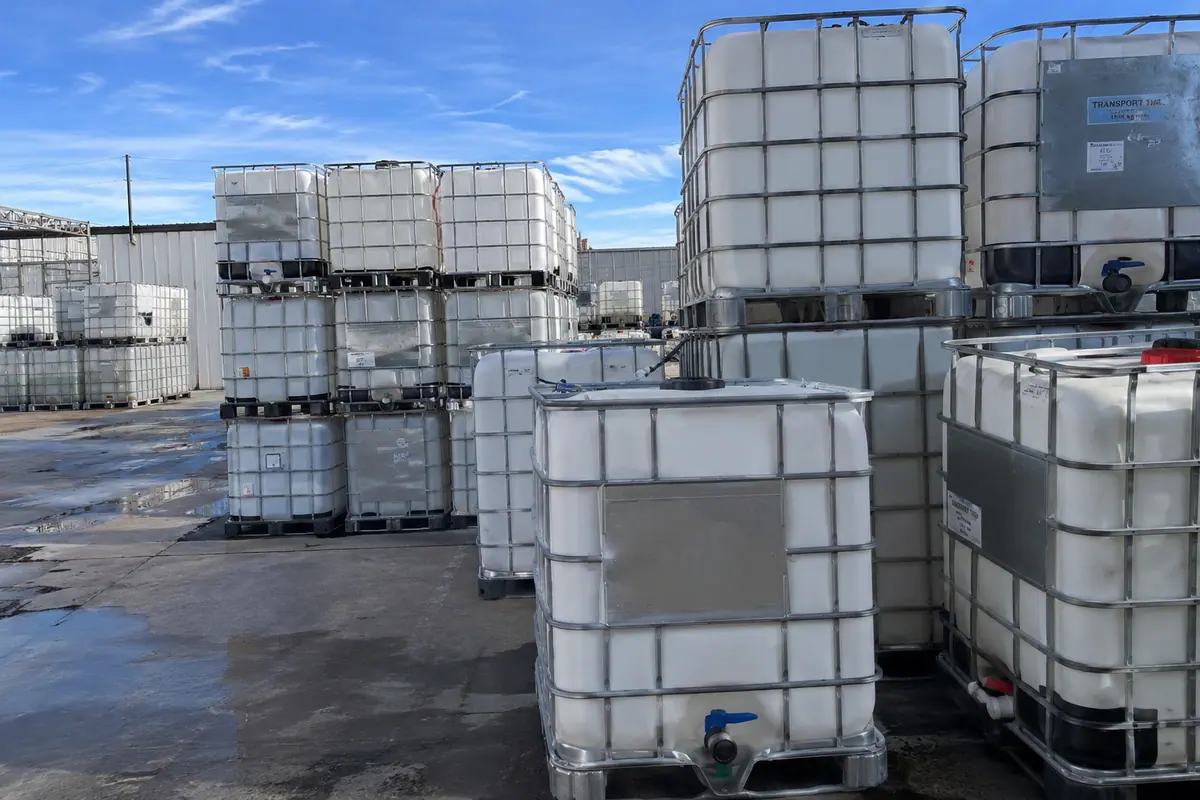
Know what you are buying
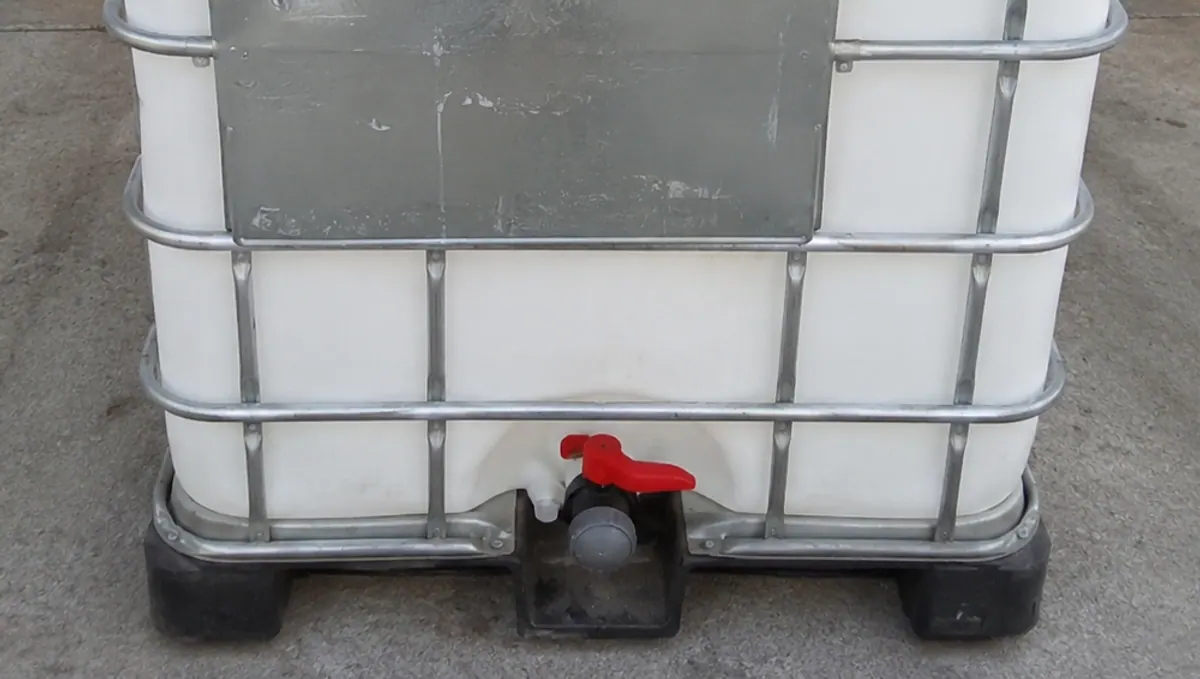
A tote is six replaceable parts pretending to be one object.
This is why reconditioning works. A dead valve is a $14 part, not a dead container. A bent cage is twenty seconds on a hydraulic jig. Only the bottle is genuinely consumable, and it lasts far longer than most buyers assume.
| Size | Footprint | Gross | Tare |
|---|---|---|---|
| 275 gal | 48 × 40 × 46 in | ~2,470 lb | 125 lb |
| 330 gal | 48 × 40 × 53 in | ~2,970 lb | 160 lb |
Same pallet footprint, seven inches of height apart. That difference is the entire reason a 275 double-stacks in a 53 foot trailer and a 330 does not — and it is the single most common mistake we see first-time buyers make.
Our party trick
The Reuse Ledger.
Most suppliers put a leaf in their logo and call it a sustainability policy. We would rather hand you the arithmetic. Move the sliders and watch exactly what your order keeps out of a landfill, a river and a furnace.
The reuse ledger
Set your numbers. Watch what reuse actually buys the planet.
A tote in a managed loop turns six to ten times before it is retired. Each turn is another new container that never had to exist.
88%
of the cradle-to-gate impact of a brand-new container, avoided.
≈ 55,120 single-use plastic bottles' worth of resin
Cage and base kept out of the shredder queue
≈ 199 showers not taken by a factory
≈ 2,319 miles not driven · 43.0 tree-years
≈ 13.3 pickup truck beds of void space
Zero-landfill on the container stream since 2016
Our arithmetic, in the open
Per unit, per cycle: 48 lb HDPE, 118 lb steel, 141 gal water, 86 lb CO₂e, 36 ft³ landfill volume. Multiplied by 24 totes × 1 cycle.
Factors are conservative cradle-to-gate estimates for HDPE resin, galvanised tube steel and our own metered wash-line water draw. We would rather under-claim and be believed than over-claim and be audited.
The yard
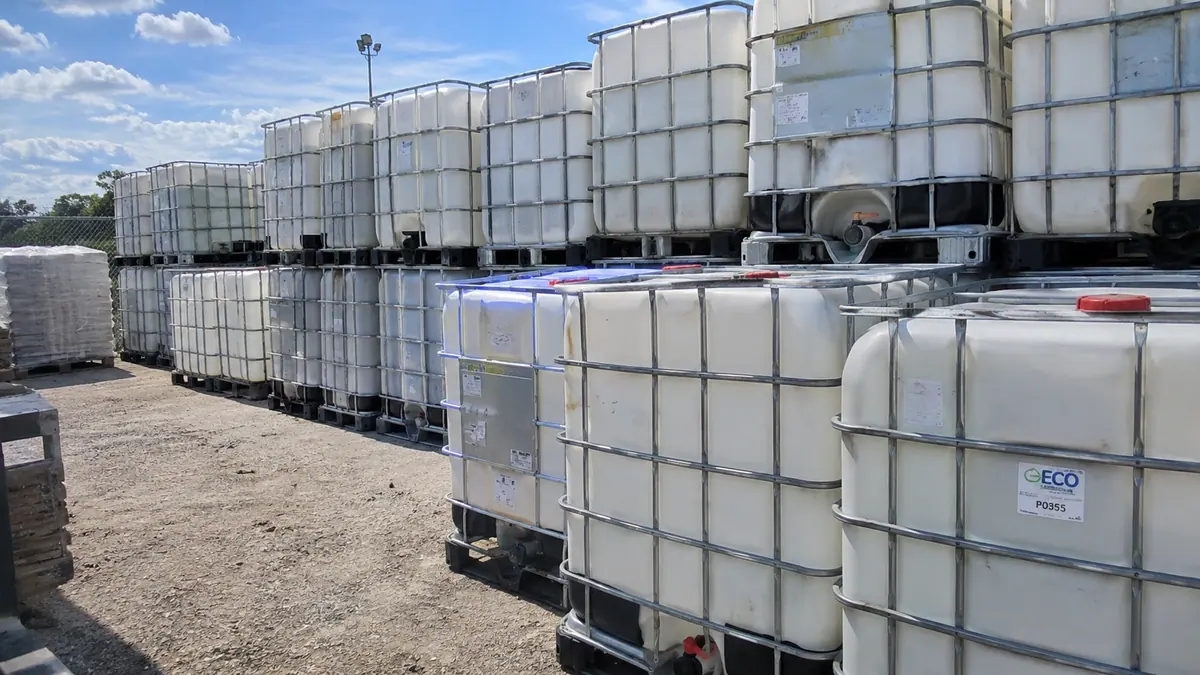
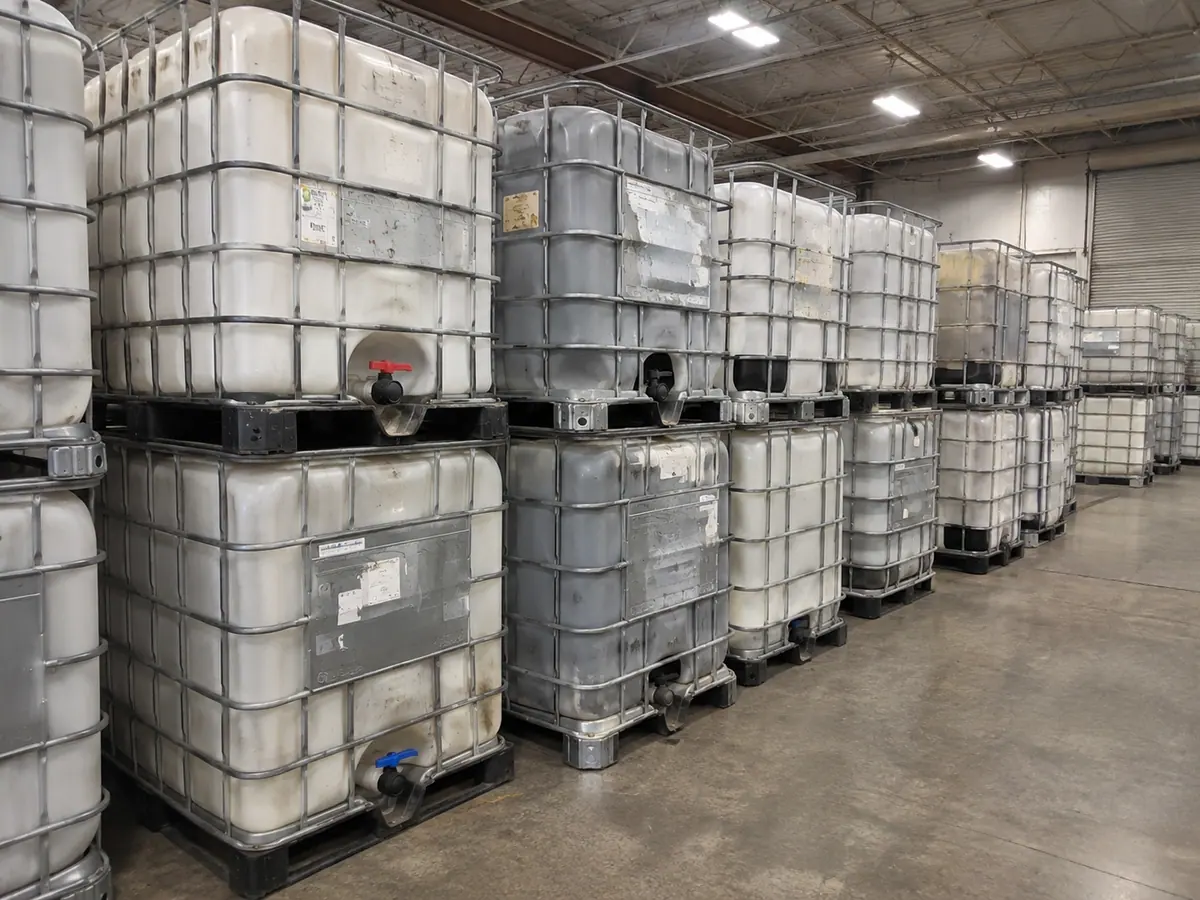
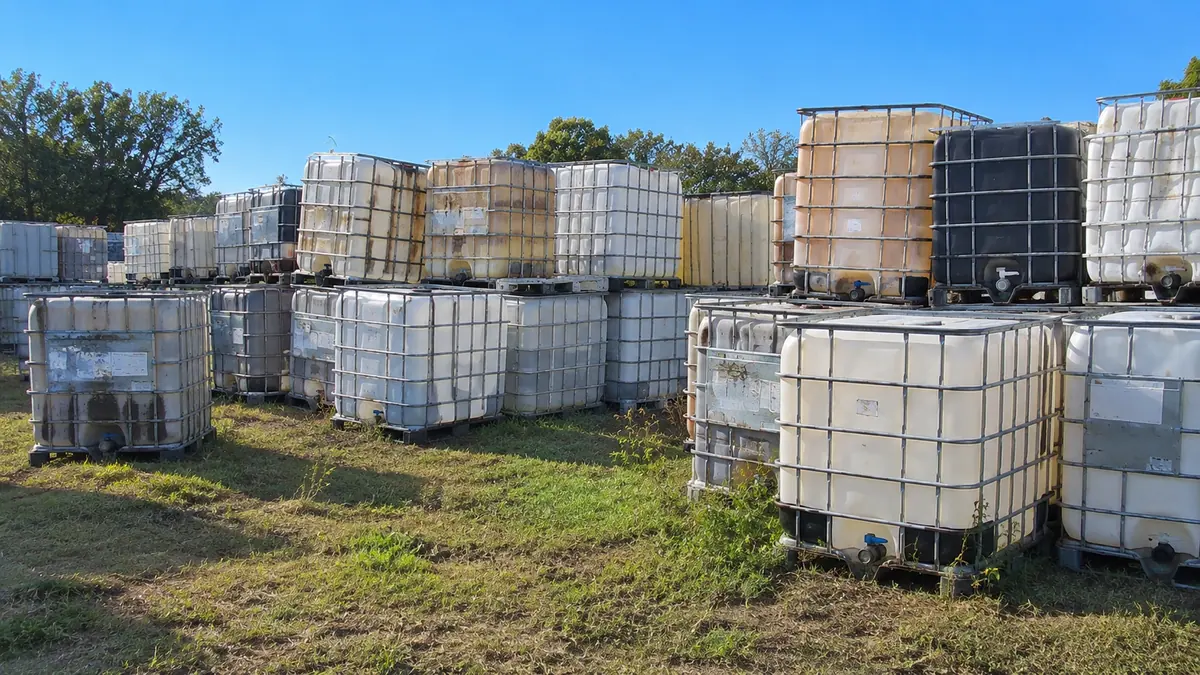
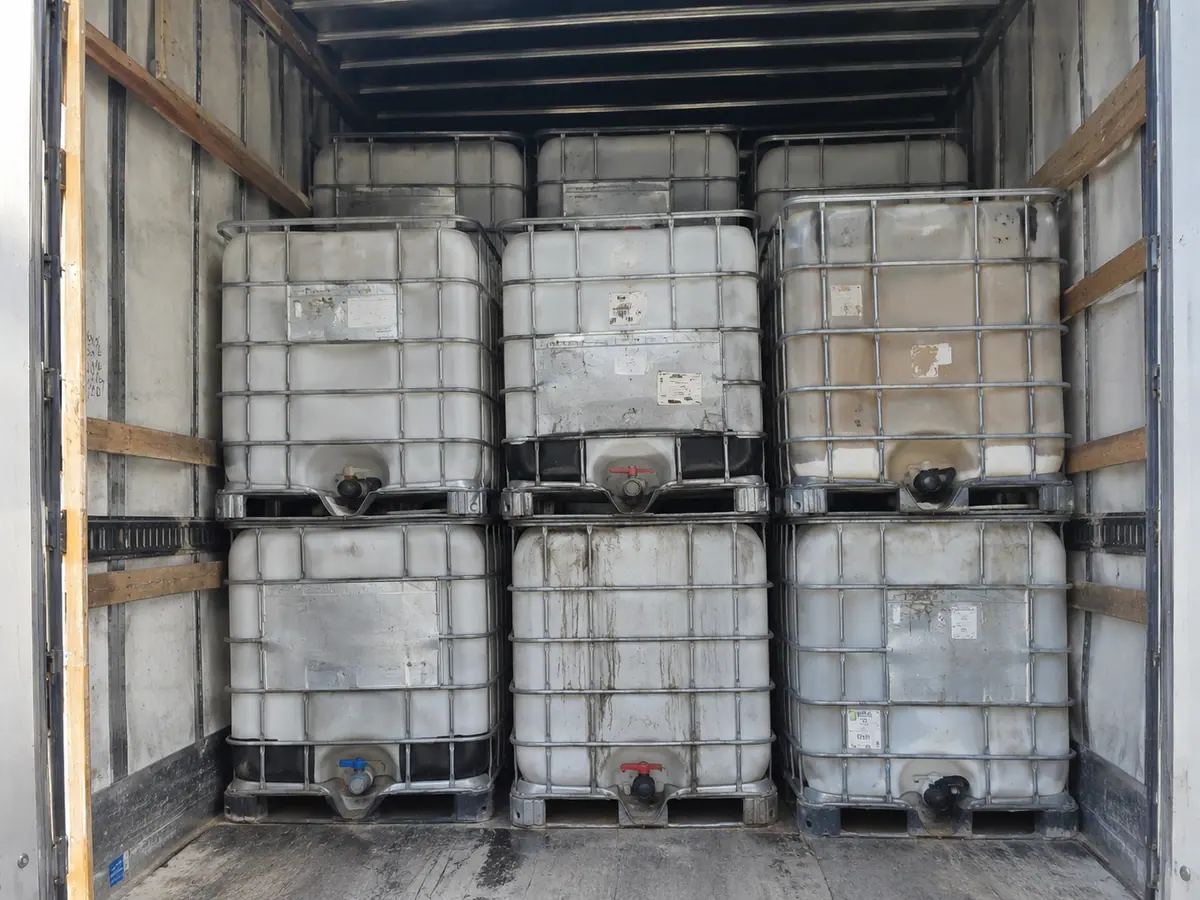
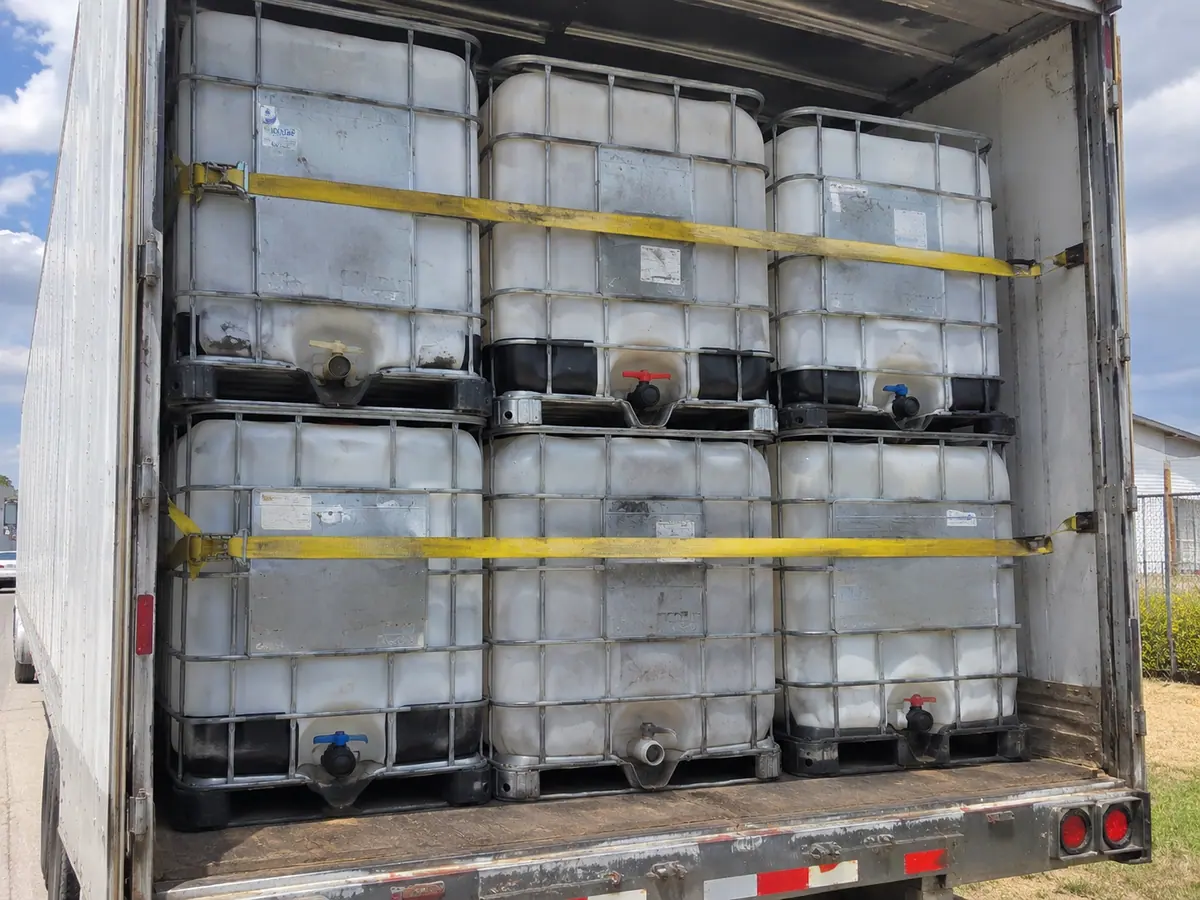
This is the whole business, photographed.
No stock library, no renders. Intake, wash, grade, load, deliver — the same containers at every stage of the loop.
Services
Seven things we do with a tote besides sell it.
The uncomfortable comparison
Two ways to be green. Only one of them is actually green.
Option A
Recycle the tote
- Material is recovered — roughly 48 lb of HDPE per bottle
- Granulating, pelletising and re-moulding all cost energy again
- The new container is usually down-cycled, not re-moulded as a tote
- The steel cage is shredded even though it was structurally fine
Necessary, and we do it — but only once a bottle genuinely cannot be saved.
Option B
Reuse the tote
- The embodied energy of the original manufacture stays in service
- A wash cycle costs about 23 gal of water and a fraction of the carbon
- The 118 lb steel cage keeps doing the job it was built for
- Same container, six to ten more working lives
This is the default at RetoteHub. Recycling is what happens when reuse has been exhausted.
“People ask how many totes we recycle. The honest brag is the opposite number — how few. Every bottle that goes to the granulator is one we failed to save.”Marisol Vega · Yard Operations Lead
- ASK US WHAT WAS IN IT — WE WILL TELL YOU
- NO PHONE LINE · EMAIL ONLY · FASTER THAN HOLD MUSIC
- BUY-BACK CLAUSE ON EVERY INVOICE
- 23 GALLONS OF WATER PER WASH, NOT 140
- ONE IN EIGHT ARRIVALS IS REFUSED AT THE GATE
Knowledge hub
Long reads from people who actually wash these things.
No gated whitepapers, no email wall. Just what we have learned hauling, washing and testing a few hundred thousand containers.
Used vs New IBC Totes: the honest cost comparison
A 275 gallon tote costs about three times more new than reconditioned. Here is what you actually give up — and what you do not.
Open 02Process · 8 minInside the wash line: how a dirty tote becomes a sellable one
Eleven stations, about forty minutes of machine time, and one decision that sends a third of arrivals straight to regrind.
Open 03Specs · 7 min275 vs 330 gallon: which tote actually fits your operation
They share a footprint, they do not share a height, and that single difference decides whether you can double-stack in your trailer.
Open 04Compliance · 6 minHow to read the nameplate on any IBC tote
31HA1/Y/0921/USA/M4719 is not a serial number. It is six sentences about what the container is legally allowed to do.
Open 05Upcycling · 10 minTurning a retired tote into a 275 gallon rain harvester
The most satisfying thing we do: a container that has finished its industrial life catching water off a roof for the next twenty years.
Open 06Operations · 7 minClosed-loop container programmes: stop buying totes entirely
For plants that ship more than forty totes a month, ownership is usually the expensive option.
OpenSpecs, not vibes
Every dimension we stock, in one table.
Printed, laminated and taped to the wall of our shipping office. Here it is without the coffee rings.
| Capacity | Footprint (L × W × H) | Gross weight | Tare | Lid / outlet | Base & cage | Typical use |
|---|---|---|---|---|---|---|
| 275 gal / 1,040 L | 48 × 40 × 46 in | ~2,470 lb | 125 lb (poly base) | 6 in / 2 in NPT | Steel cage, 4-way base | Most common in North America |
| 275 gal XL / 1,040 L | 48 × 40 × 53 in | ~2,470 lb | 140 lb | 6 in / 2 in NPT | Taller cage, narrower footprint | Tight-aisle warehouses |
| 330 gal / 1,250 L | 48 × 40 × 53 in | ~2,970 lb | 160 lb | 6 in / 2 in NPT | Steel cage, 4-way base | Best cost per gallon |
| 350 gal / 1,325 L | 48 × 40 × 56 in | ~3,150 lb | 175 lb | 6 in / 3 in NPT | Reinforced cage | High-density chemistry |
| 120 gal / 454 L | 40 × 32 × 36 in | ~1,100 lb | 78 lb | 4 in / 2 in NPT | Compact cage | Lab, pilot, sampling |
| 550 gal / 2,082 L | 61 × 42 × 55 in | ~4,900 lb | 310 lb | 6 in / 3 in NPT | Heavy steel cage | Bulk water & agriculture |
| Stainless 350 gal | 48 × 42 × 59 in | ~3,000 lb | 395 lb | Tri-clamp / butterfly | 316L welded frame | Food, pharma, solvents |
| Stainless 550 gal | 48 × 42 × 73 in | ~4,700 lb | 520 lb | Tri-clamp / butterfly | 304 welded frame | Breweries, dairies |
Dimensions vary ±1 inch between manufacturers. Always trust the nameplate on the unit in front of you over any chart, including ours.
Straight answers
Frequently Asked Questions
01What does RetoteHub actually do?
02Can I buy just one tote, or is there a minimum order?
03How do I know what was previously in a used tote?
04Do you buy used IBC totes, and is pickup free?
05How quickly can I get a quote?
Got a yard full of empties? That is inventory, not a disposal problem.
Send us a photo of the nameplate and a rough count. We will tell you what they are worth, what we can take, and when we can collect — usually within a business day.